
The Short Answer: Social Media Drives the Majority of Restaurant Bookings
Social media doesn’t just inspire dining decisions — it now directly drives them. 74% of diners use social media to choose where they eat, and 57% book through social platforms (Marketing LTB, 2025). That means more than half of your potential covers originate from Instagram, Facebook, or TikTok before anyone visits your website. The shift has been dramatic. Five years ago, social media was a branding tool for restaurants. Today it’s a booking channel — one that outperforms traditional advertising for cost efficiency. Facebook ads for restaurants average just $0.85 CPC (Mesha, 2025), making social the cheapest path to a filled dining room. Restaurants that treat social media as a discovery and conversion engine, not just a content calendar, consistently achieve restaurant booking cost benchmarks in the green zone.
TL;DR: Social media now drives the majority of restaurant bookings. 74% of diners use social platforms to choose restaurants, and 57% book directly through them. User-generated content converts at 4x the rate of branded photos, and Facebook ads average just $0.85 CPC for restaurants (Marketing LTB, 2025).
How Do Diners Use Social Media to Choose Restaurants?
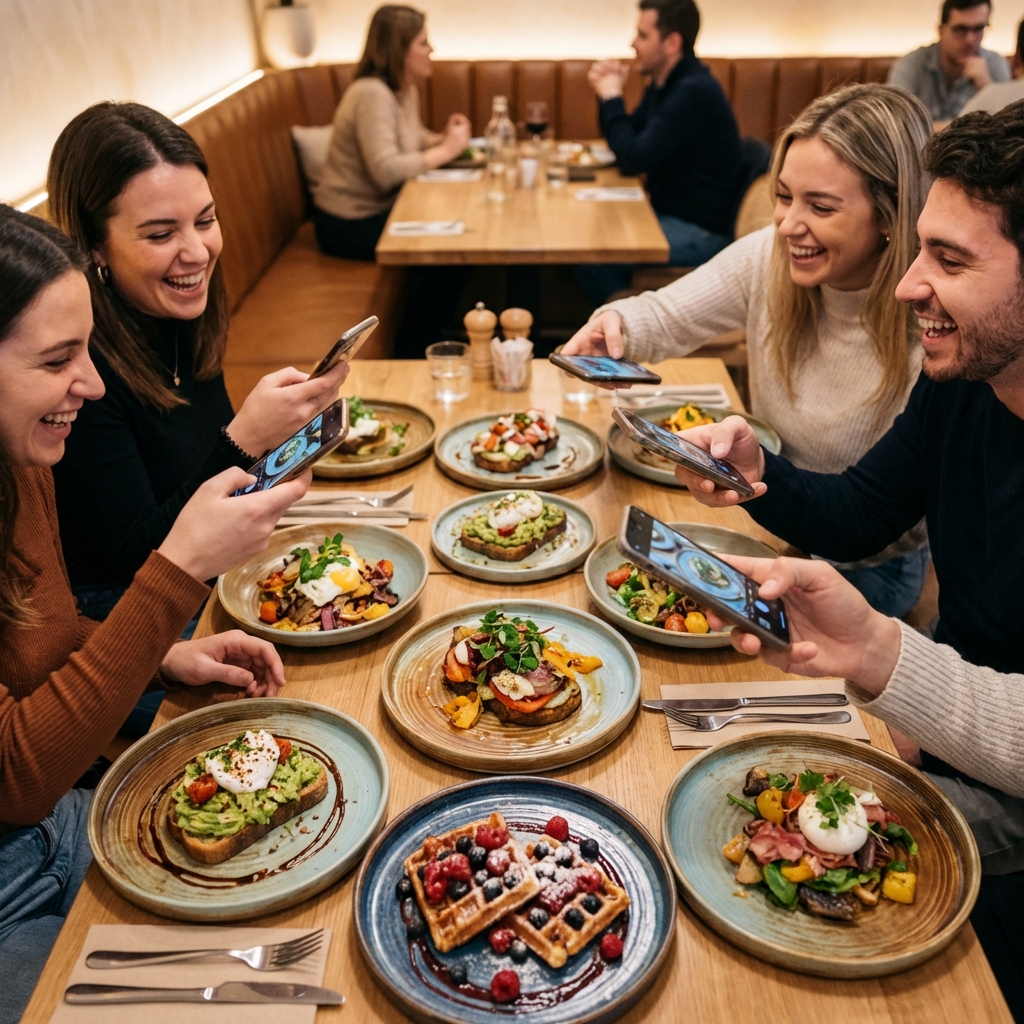
The path from social scroll to restaurant booking follows a predictable pattern. 40% of diners visit a restaurant specifically after seeing food photos online (Marketing LTB, 2025). This isn’t passive browsing — it’s active intent triggered by visual content that makes people hungry.
The discovery process typically works in three stages. First, a diner encounters food content in their feed — a friend’s story, a Reel, a TikTok. Second, they visit the restaurant’s profile to check the menu, vibe, and recent reviews. Third, they either book through a link in bio, tap a “Reserve” button, or search the restaurant name on Google to complete the booking.
What’s changed is how compressed this journey has become. A single piece of compelling content can take someone from “I didn’t know this place existed” to “I’ve booked a table for Saturday” in under two minutes. The restaurants that understand this don’t post for engagement metrics. They post for booking intent.
Which Platforms Matter Most for Restaurant Discovery?
Instagram and TikTok dominate restaurant discovery, but they serve different functions. Instagram works as a visual menu and social proof engine. Diners scroll through your grid to assess the food, the atmosphere, and what real customers think. It’s where they go to confirm a decision they’re already leaning toward.
TikTok operates earlier in the funnel. 61% of diners say TikTok food content influences where they eat (Marketing LTB, 2025). The platform’s algorithm surfaces restaurant content to users who haven’t searched for it — creating demand rather than capturing it. A single viral clip of a cheese pull or a tableside flambe can generate hundreds of bookings in a week.
Facebook still matters, particularly for older demographics and local targeting. Its advertising platform remains the most cost-effective for restaurants, with an average CPM of just $8.75 and a cost per lead of $3.16 (Mesha/CUFinder, 2025). For restaurants running paid campaigns, Facebook’s targeting precision and low costs make it the workhorse.

Why Does User-Generated Content Outperform Branded Photos?
User-generated content drives 4x higher conversion rates than branded photography for restaurants (Marketing LTB, 2025). That statistic surprises restaurateurs who’ve invested thousands in professional food photography — but the reason is trust, not quality.
When a diner sees a polished, studio-lit photo of a dish, their brain registers it as advertising. When they see a slightly imperfect photo taken by another diner under restaurant lighting, they register it as a recommendation. The imperfection is the signal. It says “a real person ate this and thought it was worth sharing.”
We’ve found that UGC doesn’t need to replace professional photography — it needs to surround it. The most effective restaurant social strategies use professional shots for menu items and profile aesthetics, then flood their feed with reshared customer content. This mix gives you polish for first impressions and authenticity for conversions.
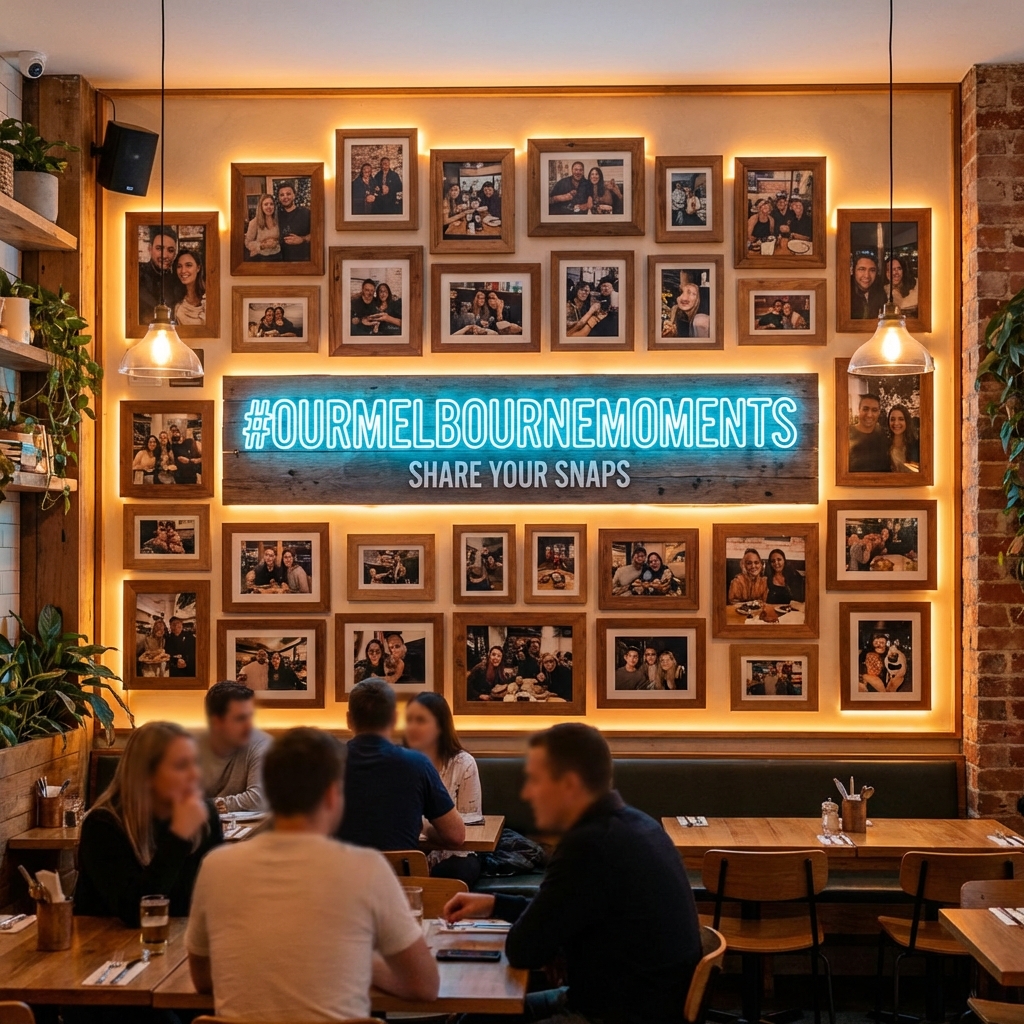
How do you get more of it? Simple tactics work: an Instagrammable plating presentation, good natural lighting at window tables, a branded hashtag printed on the menu, and staff who encourage photos rather than discourage them. Some restaurants even create a dedicated “photo moment” in the dining experience — a dramatic pour, a smoke cloche reveal, a dessert with sparklers. These moments aren’t just theatre. They’re booking engines for next week’s customers.
Encouraging UGC Without Being Pushy
The best UGC strategies don’t feel like marketing. Restaurants that consistently generate customer content focus on making the experience inherently shareable. A beautifully designed cocktail, an unexpected amuse-bouche, a stunning view from the table — these trigger organic sharing without any prompting.
When resharing UGC, always credit the original creator. This builds community and encourages others to share, knowing they might get featured. It’s a virtuous cycle that costs nothing and converts better than any ad you’ll run.
What Do Social Media Restaurant Advertising Costs Look Like?
Restaurant advertising on social media is remarkably cost-effective compared to other industries. Facebook CPC for restaurants averages $0.85 (Mesha, 2025), roughly 60% cheaper than the Google Ads travel and hospitality average of $2.12 CPC (WordStream, Apr 2024–Mar 2025).
The low costs reflect how social media advertising works for food. Dining is visual, emotional, and impulse-driven. People don’t need much convincing when they’re staring at a perfectly seared steak in their feed at 4pm. That emotional trigger keeps click-through rates high and costs low.
In our experience managing Australian restaurant campaigns, the cheapest bookings consistently come from Instagram Stories and Reels ads featuring real food footage — not stock imagery or overly designed graphics. Short video of dishes being prepared or served generates more clicks per dollar than any static image format we’ve tested.
Social Media vs Google Ads for Restaurants
Both platforms serve restaurants well, but they capture different types of intent. Here’s how the costs and performance compare:
| Metric | Facebook/Instagram | Google Ads (Travel & Hospitality) |
|---|---|---|
| Average CPC | $0.85 | $2.12 |
| CPM | $8.75 | Varies by market |
| Cost Per Lead | $3.16 | Varies by market |
| CTR | Varies by format | 8.73% |
| Conversion Rate | Varies by format | 5.75% |
Sources: Mesha/CUFinder (2025); WordStream (Apr 2024–Mar 2025)
The smart approach isn’t choosing one or the other. Google Ads captures people actively searching “restaurant near me tonight.” Social media creates demand among people who weren’t yet thinking about dinner. Running both covers the full funnel — social for awareness and impulse, search for high-intent capture.
How Should Restaurants Measure Social Media Booking Performance?
Tracking social media’s impact on bookings requires more than counting likes. The metrics that matter connect social activity to actual reservations. Our Hospitality Marketing Benchmarks 2026 guide breaks down performance tiers for dining campaigns, and Link CTR is the primary proxy metric when direct booking tracking isn’t available.
Link CTR Benchmarks for Dining Campaigns
| Performance Level | Link CTR | What It Means |
|---|---|---|
| ● Strong | 1.6%+ | Ads are compelling and reaching the right audience — people are clicking through to book |
| ● Average | 0.9–1.2% | Room for improvement — test different creative, copy, or audience segments |
| ● Underperforming | Under 0.9% | Content isn't driving action — review imagery, offer, and targeting urgently |
Source: Merge Marketing — based on 3,000+ Australian hospitality campaigns (2008–2026)
Link CTR measures whether people tap through from your ad to your booking page. It’s the clearest signal of commercial intent from social content. If your Link CTR sits in the green zone but bookings are still low, the problem is on your website — not your social strategy. For a deeper breakdown of how to connect ad clicks to actual reservations, see our guide to tracking restaurant bookings through ads.
Cost Per Booking Benchmarks
When booking tracking is enabled through platforms like SevenRooms, NowBookit, or OpenTable, cost per booking becomes the definitive performance metric. Here’s how we categorise it:
| Performance Level | Cost Per Booking | What It Means |
|---|---|---|
| ● Strong | Under $10 | Campaign is performing well — scale spend or replicate the approach |
| ● Average | $10–$20 | Acceptable but worth optimising — review creative, targeting, or landing page |
| ● Underperforming | Over $20 | Needs urgent attention — audit the full booking funnel from ad to confirmation |
Source: Merge Marketing — based on 3,000+ Australian hospitality campaigns (2008–2026)
What Practical Steps Can Restaurants Take Right Now?
You don’t need a massive budget or a social media agency to start turning social content into bookings. 40% of diners visit a restaurant after seeing food photos online (Marketing LTB, 2025), so even organic content can move the needle if it’s intentional.
Quick Wins for Organic Social
- Post food content at decision times: Share lunch content at 10–11am, dinner content at 3–5pm. That’s when people are deciding where to eat, and your post arrives right when hunger kicks in.
- Reshare every piece of customer content: When someone tags your restaurant, reshare it to your Stories within hours. This rewards the behaviour and signals to other customers that sharing is welcomed.
- Add a booking link to every profile: Your Instagram bio, Facebook action button, and TikTok profile should all link directly to your reservation page — not your homepage.
- Film 15-second Reels of plating: You don’t need a videographer. A phone on a tripod filming a chef finishing a dish captures the motion and texture that still photos can’t convey.
Paid Social Strategies That Convert
- Run retargeting campaigns to website visitors: Someone who visited your menu page but didn’t book is your warmest audience. A retargeting ad with a compelling food image and “Book your table” CTA converts these almost-customers at a fraction of cold audience costs.
- Use location-based targeting within 5–10km: Restaurants don’t need citywide reach. Tight geographic targeting reduces wasted spend and reaches people who’ll actually make the trip.
- A/B test UGC against branded photos: Run the same ad with a customer photo versus a professional photo. We’ve consistently seen UGC win on click-through rate and cost per booking. Test it with your own content to confirm.
- Promote specific occasions, not generic dining: “Book your Saturday date night” outperforms “Visit our restaurant.” Specificity creates urgency and helps the diner picture themselves at your table.
Across our Australian restaurant campaigns, we’ve observed that Reels and Stories ads featuring real kitchen footage outperform static food photography by 35–50% on Link CTR. The motion and authenticity of watching a dish come together creates a stronger emotional response than even the most beautiful still image.
Frequently Asked Questions
Does social media actually lead to restaurant bookings, or just awareness?
57% of diners now book directly through social media platforms (Marketing LTB, 2025). Social media has moved well beyond awareness. Features like Instagram’s “Reserve” button, link-in-bio booking tools, and Facebook action buttons have turned social profiles into direct booking channels. The key is making the path from content to reservation as short as possible — ideally two taps or fewer.
Which social platform delivers the cheapest restaurant bookings?
Facebook and Instagram consistently deliver the lowest cost per booking for restaurants, with average CPCs of just $0.85 compared to Google Ads at $2.12 (Mesha, 2025; WordStream, 2025). However, Google captures higher-intent searches. Most restaurants achieve the best results by running both — social for demand creation and Google for demand capture. See our restaurant booking cost benchmarks for detailed cost comparisons.
How important is TikTok for restaurant marketing?
TikTok has become a major discovery channel for restaurants. 61% of diners say TikTok food content influences where they eat (Marketing LTB, 2025). Unlike Instagram, where users mostly see content from accounts they follow, TikTok’s algorithm actively surfaces restaurant content to new audiences. A single viral video can generate hundreds of bookings. The platform rewards authenticity over production value, so you don’t need a big budget to get started.
Should restaurants invest in professional food photography or user-generated content?
Both, but UGC should be your priority for conversion-focused content. User-generated content converts at 4x the rate of branded photography (Marketing LTB, 2025). Professional photos still serve a purpose — they’re essential for your website, menu, and profile aesthetics. But for social ads and feed content designed to drive bookings, customer photos and real kitchen footage consistently outperform polished studio shots.
Want to benchmark your restaurant’s social media performance? Our Hospitality Marketing Benchmarks 2026 guide covers cost per booking, Link CTR, and ROAS targets across every hospitality category. Or get in touch for a free review of your restaurant’s social media campaigns.