The Short Answer: 85% of Visitors Leave Without Booking
Hotel websites lose roughly 85% of visitors before a booking is completed, leaving the average property with just 2.4 conversions per 100 visitors (Revinate). That’s not a typo. For every 100 people who land on a hotel website with some level of interest, fewer than three actually finish a reservation. The hotel booking abandonment rate sits among the highest of any online transaction category, and most of the causes are fixable. This number comes from Merge’s analysis of 3,000+ Australian hospitality campaigns delivered between 2008 and 2026, cross-referenced with published industry data from Revinate and SiteMinder. The gap between visitors and bookers represents an enormous revenue recovery opportunity for hotels willing to address the friction points.
TL;DR: Around 85% of hotel website visitors abandon before booking, producing just 2.4 conversions per 100 visitors (Revinate). The top causes are price comparison shopping, surprise fees, and complicated forms. Recovery emails alone can recapture 15-30% of lost bookings at near-zero cost.
What Does the Hotel Booking Funnel Actually Look Like?
The hotel booking funnel narrows dramatically at each stage. Google Ads in the travel sector converts at 5.75% (WordStream, Apr 2024-Mar 2025), but that figure measures ad clicks to conversions — not the full website visitor journey. When you track every visitor who lands on a hotel website, the picture is far starker.
Out of 100 visitors, roughly 15 will engage deeply enough to start the booking process — selecting dates, viewing room options, or clicking a “Book Now” button. Of those 15, about 85% drop off during checkout. Only 2-3 finish. That’s the funnel hotels are working with.
Why does this matter for your ad budget? If you’re paying for hotel Google Ads to drive traffic, every visitor who abandons represents wasted spend. A hotel spending $5,000/month on ads and converting at 2.4% is paying roughly $20 per completed booking in click costs alone. Improving conversion from 2.4% to 3.5% — not an unrealistic target — drops that cost by almost a third without spending a cent more on advertising.
What Causes Hotel Booking Abandonment?
Price comparison is the leading driver, responsible for an estimated 35-40% of all hotel booking abandonments (Revinate; industry analysis). Guests aren’t necessarily rejecting your hotel. They’re checking whether they can find the same room cheaper on an OTA, a metasearch engine, or a competitor’s site. Understanding what triggers abandonment at each stage helps you prioritise the fixes that recover the most revenue.
| Abandonment Cause | Estimated Impact | When It Happens |
|---|---|---|
| Price comparison / shopping around | 35-40% | After viewing rates, before checkout |
| Unexpected fees or taxes at checkout | 20-25% | At final price reveal |
| Complicated booking form | 15-20% | During form entry |
| Slow page load / technical issues | 10-15% | Any stage, especially mobile |
| Lack of trust signals / security concerns | 5-10% | At payment entry |
Notice that the top two causes — price shopping and surprise fees — account for roughly 55-65% of all abandonment. These aren’t design problems. They’re pricing transparency problems. A guest who sees $220/night on your rooms page and then encounters $280 at checkout (after resort fees, cleaning fees, and taxes) feels deceived. That emotional response kills conversions far more effectively than a slow-loading page ever could.

Price Comparison Is Not the Same as Price Rejection
Here’s a distinction most hotels miss. A guest who abandons to compare prices hasn’t decided against you. They’ve decided they need more information before committing. That’s fundamentally different from someone who looked at your rate, thought “too expensive,” and left. The comparison shopper is still warm. They’re still interested. They just need a reason to come back and book directly.
This is where rate parity and best-rate guarantees become critical. If your direct rate matches or beats the OTAs, and you communicate that clearly, you remove the motivation to leave and compare. Hotels retain 94.87% of direct booking revenue compared to just 82.06% through OTAs (Punch Hospitality/Revinate), so keeping that guest on your site is worth real money. For the full direct vs OTA cost breakdown, see our dedicated analysis.
The Mobile Checkout Problem
Mobile users now account for the majority of hotel website traffic, but most booking engines were designed for desktop. Tiny date pickers, room comparison tables that require horizontal scrolling, and payment forms that don’t autofill correctly on mobile all compound the abandonment problem. If your booking engine isn’t mobile-optimised, you’re essentially turning away your largest traffic segment.
How Much Revenue Does Abandonment Actually Cost?
For a 50-room hotel running at 70% occupancy with a $250 average nightly rate, roughly $2.3 million in potential annual bookings are lost to the 85% abandonment rate. That figure assumes current traffic levels and applies the Revinate conversion baseline of 2.4%. Even recovering a fraction of those lost bookings materially changes a property’s revenue picture.
Let’s make this concrete. If that hotel generates 1,000 website visits per month, it’s completing about 24 bookings. At an average booking value of $500 (two-night stay), that’s $12,000/month in direct online revenue. But 85 out of every 100 visitors showed interest and left. If recovery tactics bring back just 10% of abandoners, that’s 8.5 additional bookings per month — an extra $4,250/month or $51,000/year.
The cost to recover those bookings? Nearly nothing. Recovery emails, exit-intent offers, and retargeting ads are among the cheapest tactics in hotel marketing. Email marketing ROI for hotels runs at $36 for every $1 spent (SiteMinder), making abandonment recovery one of the highest-return activities available to any property.
What Recovery Strategies Actually Work?
Abandonment recovery emails can recapture 15-30% of lost bookings when timed and personalised correctly (Revinate; industry estimates). That range depends heavily on how quickly the email is sent, what incentive (if any) is included, and whether the email renders well on mobile. But email is just one piece of a broader recovery system.
Email Recovery Sequences
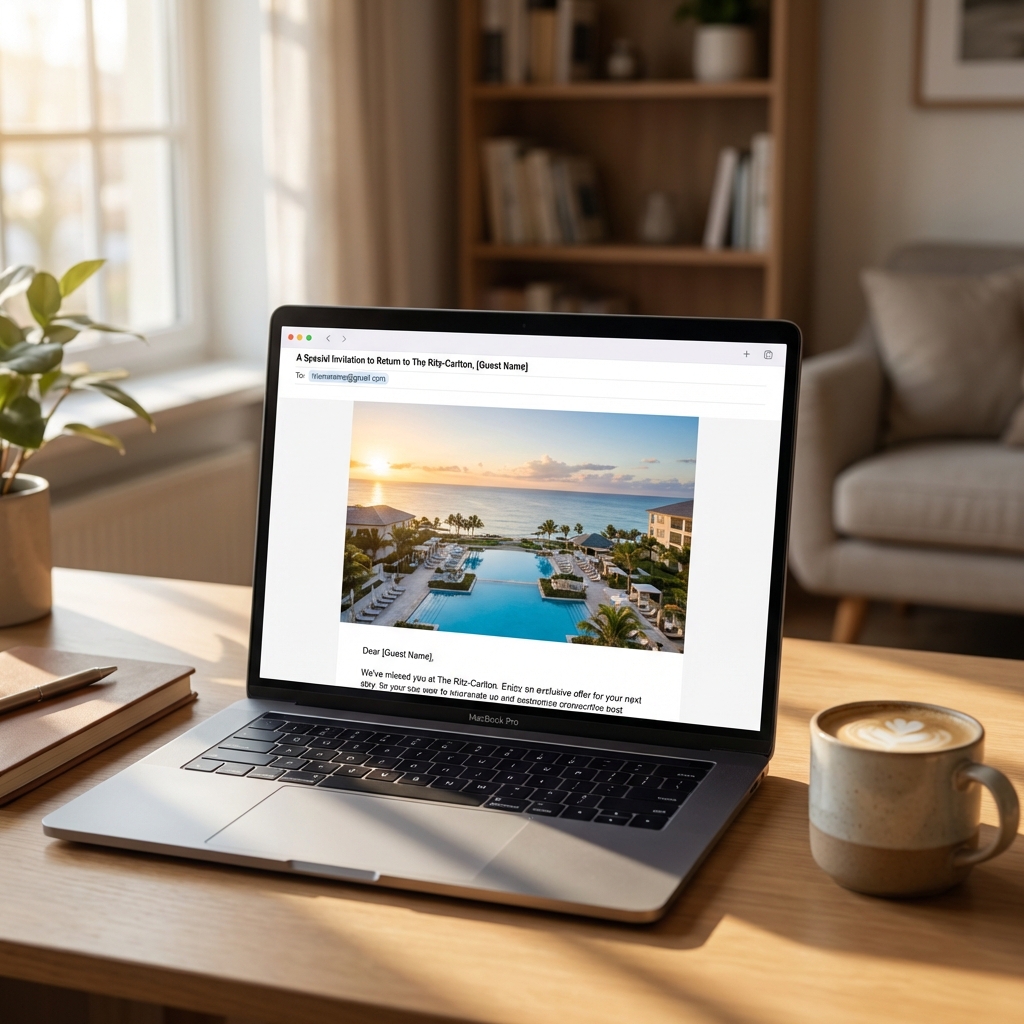
The most effective hotel recovery emails follow a three-touch sequence. The first email sends within one hour of abandonment — a simple reminder with the room they viewed, dates they selected, and a direct link back to complete the booking. No discount needed at this stage. Many abandoners simply got distracted or wanted to check with a travel companion.
The second email sends 24 hours later. This one adds social proof: a guest review, a TripAdvisor rating badge, or a note about limited availability for their dates. The third email, sent 48-72 hours after abandonment, can introduce a small incentive — a complimentary breakfast, late checkout, or a modest rate reduction. This graduated approach avoids training guests to abandon on purpose for a discount.
Exit-Intent Interventions
Before a visitor even leaves your site, exit-intent technology can detect when their cursor moves toward the browser’s close button. A well-timed overlay offering a best-rate guarantee, a direct booking perk, or simply asking “Still deciding?” with a way to save their search can reduce abandonment at the source. These interventions work best when they’re genuinely helpful rather than aggressive pop-ups.
Retargeting Ads
Guests who abandon your booking engine are ideal retargeting candidates. They’ve demonstrated clear intent — they know your hotel, they’ve checked rates, they’ve possibly selected dates. Serving them a display or social ad within 24-48 hours keeps your property top-of-mind while they comparison shop. Direct bookers are 2.1-3.4x more likely to return compared to OTA guests (HotelsSEO CRM data, 2025-2026), so investing in retargeting to close the first booking pays dividends over the guest’s lifetime.
How Can Hotels Reduce Abandonment Before It Happens?
Prevention outperforms recovery every time. Loyal hotel guests spend 22.4% more per stay than first-time visitors (SiteMinder), which means getting that first booking right has compounding value. Here are the fixes that produce the largest conversion lifts, ranked by typical impact.

Show the Full Price Early
Surprise fees are the second-largest abandonment driver. The fix is straightforward: show the total price, including all taxes and fees, from the first rate display. Yes, this might make your initial price look higher than competitors who hide fees until checkout. But guests who proceed past an honest price display are far more likely to complete the booking. You’ll attract fewer tyre-kickers and convert more genuine buyers.
Simplify the Booking Form
Every additional form field increases the chance of abandonment. Ask yourself: do you really need a fax number? A company name? A second address line? Strip the form down to essentials — name, email, phone, payment. Collect everything else post-booking through a pre-arrival email. Hotels that reduce their booking form from 15+ fields to under 8 consistently report higher completion rates.
Optimise for Mobile Speed
A booking engine that loads in two seconds on desktop but takes six seconds on mobile is bleeding revenue. Test your complete booking flow on a mid-range smartphone using a standard 4G connection. If any step takes more than three seconds to load, that’s a fix worth prioritising. Given that accommodation “Book Now” CPC benchmarks range from under $1.50 (strong) to over $2.50 (underperforming) (Merge Marketing), every abandoned mobile session wastes paid traffic.
Add Trust Signals at Checkout
Security concerns account for 5-10% of abandonment, but the fix is inexpensive. Display SSL badges, accepted payment logos, and a clear cancellation policy directly on the checkout page. A “Best Rate Guarantee” badge paired with a brief explanation builds additional confidence. Guest reviews or a TripAdvisor widget near the payment form also reduce hesitation.
Offer a Best-Rate Guarantee
If a guest knows your direct rate is the lowest available, the motivation to leave and compare evaporates. A clearly displayed “Best Rate Guarantee” with a simple claim process gives price-comparison shoppers a reason to stay. OTA commissions cost hotels 15-25% of the booking value (HotelsSEO, 2025-2026), so even offering a 5% direct booking discount still leaves you significantly ahead financially.
Frequently Asked Questions
What is the average hotel booking abandonment rate?
The average hotel booking abandonment rate sits at approximately 85%, meaning only about 15 out of 100 visitors progress past the initial browsing stage, and just 2.4 per 100 complete a booking (Revinate). This is higher than general e-commerce cart abandonment because hotel bookings involve larger purchase decisions, more comparison shopping, and longer consideration periods. The rate varies by season, property type, and how well-optimised the booking engine is.
Can recovery emails really win back lost bookings?
Yes. Well-timed abandonment recovery emails recapture 15-30% of lost bookings (Revinate; industry estimates). The key is speed — the first email should send within one hour of abandonment. Email marketing in hospitality delivers $36 for every $1 spent (SiteMinder), making recovery sequences one of the highest-ROI tactics available. A three-email sequence (reminder, social proof, incentive) outperforms a single blast.
How does booking abandonment affect paid advertising ROI?
Every abandoned booking represents wasted ad spend. Google Ads in travel converts at 5.75% (WordStream, Apr 2024-Mar 2025), but that conversion happens only when the booking engine does its job. A hotel paying $2.00 per click and converting at 2.4% spends roughly $83 in ad costs per completed booking. Improving conversion to 3.5% drops that to $57 — a 31% reduction with zero additional ad spend. See our hotel ROAS benchmarks for more context.
Should hotels offer discounts to recover abandoned bookings?
Not immediately. The first recovery email should be a simple reminder — many guests abandon due to distraction, not price resistance. Offering a discount too early trains guests to abandon intentionally. Reserve incentives for the third email in a sequence (48-72 hours post-abandonment), and consider non-monetary perks first: complimentary breakfast, room upgrade, or late checkout. These preserve rate integrity while still giving the guest a reason to return and book directly.
Want to reduce your hotel’s booking abandonment rate? See the complete conversion and cost benchmarks in our Hospitality Marketing Benchmarks 2026 guide, or request a free campaign review to identify where your booking funnel is losing revenue.